

GRANT ARAKELOVICH OGANYANTS
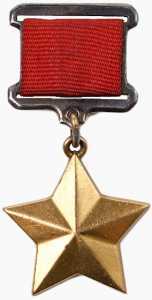
Captain, participant of the Second World War, Hero of the Soviet Union (24 March 1945)
Grant Oganyants was born on 16 April 1918 in the city of Kokand (Uzbek SSR). He completed a seven-year school, a workers’ faculty, and later graduated from the Kabardino-Balkarian Pedagogical Institute in Nalchik.
In 1937, on the eve of the 20th anniversary of the Great October Socialist Revolution, he and nine other Kabardino-Balkarian athletes completed a water journey from Nalchik to Moscow in five canoes. This route took him along the mountain rivers Urvan and Terek to the Caspian Sea, from the Caspian to the Volga, and then along the Oka and Moskva rivers to the capital.
In 1940, Oganyants was drafted into the Workers’ and Peasants’ Red Army. In 1942, he graduated from the Smolensk Military-Political School and a retraining course for armored troops. From December of that year, he served on the fronts of the Second World War, fighting on the Transcaucasian, North Caucasian, Southern, 4th Ukrainian, and 2nd Ukrainian fronts.
In 1942, he took part in a combat raid that crushed an enemy garrison in the village of Achikulak in Stavropol Krai; in 1943, he participated in battles to liberate the North Caucasus, Donbas, and Northern Tavria, including the towns of Gorodovikovsk and Rostov, as well as in the Korsun-Shevchenkovsky, Uman-Botoșani, and Iași-Chișinău offensive operations. As a company commander of the 71st Tank Regiment, Captain Oganyants personally reconnoitered a crossing under enemy fire on the approaches to the Siret River on 24 August 1944. He then led his company across the water obstacle and secured a bridgehead in the area of the settlement of Ajudeni, located 10 kilometers north of the city of Roman in Romania.
By August 1944, Captain Grant Oganyants had been appointed company commander of the 71st Tank Regiment of the 11th Guards Cavalry Division, part of the 5th Guards Cavalry Corps of the 2nd Ukrainian Front, and actively participated in the battles to liberate Romania. On 24 August, he successfully reconnoitered a route across the Siret River and crossed it with his company near the village of Ajudeni, 10 kilometers north of Roman. On 26 August, in mountainous and forested terrain with difficult relief, 27 kilometers northwest of the town of Târgu Ocna near the village of Uzveld, on the Hungarian–Romanian border, he took part in breaking through the enemy defenses and was killed in that battle. He was initially buried on the battlefield in Romania and later reburied at the Russian cemetery in the city of Chernivtsi.
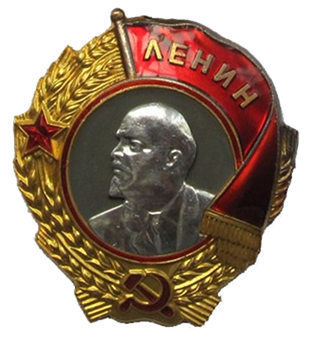
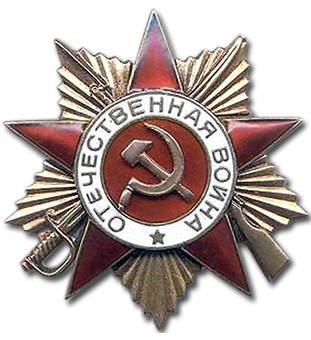
By decree of the Presidium of the Supreme Soviet of the USSR dated 24 March 1945, “for exemplary fulfillment of combat missions assigned by command on the front in the fight against the German invaders, and for the courage and heroism displayed,” he was posthumously awarded the title Hero of the Soviet Union. He was also decorated with the Order of Lenin and the Order of the Patriotic War, 2nd Class, and was permanently entered into the rolls of his military unit.
This information was taken from the “Road of Memory” (Doroga Pamyati) project.
"SOVET ITTIFOQI QAHRAMONI" UNVONI
"LENIN" ORDENI
"1-DARAJALI VATAN URUSHI" ORDENI